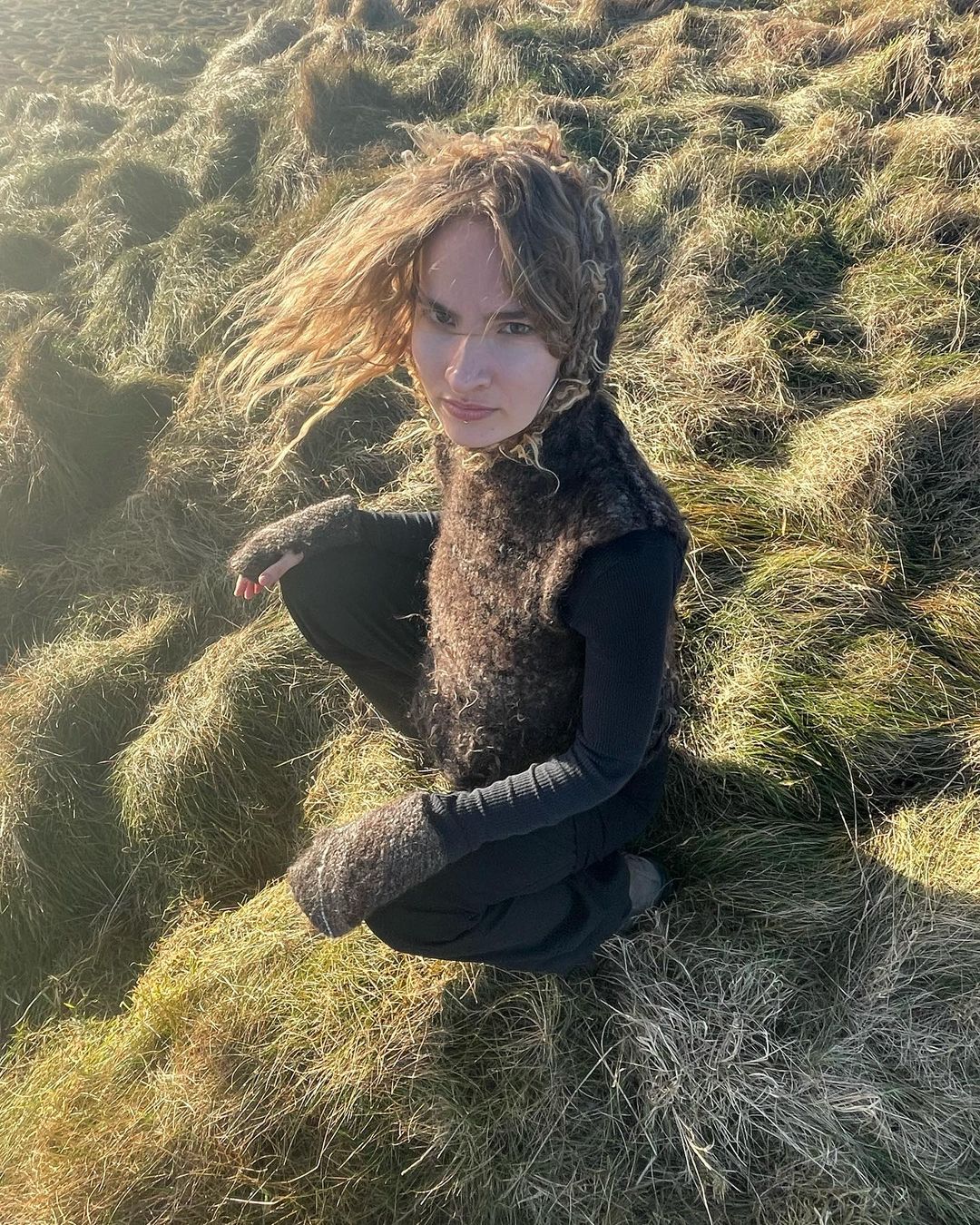
Wool and Dogme Knitting
Wool can vary significantly from one sheep breed to another. To use the wool for dogme knitting, it is necessary for the sheep to have both guard hair and undercoat. These two types of wool possess different and crucial properties, both for the sheep and for the knitting process.
Sheep breeds that have traditionally lived under the harsh weather conditions of the Nordic region, with cold winters and on rainy, windswept plains, often have both types of wool. The long, coarse guard hairs act as an outer protection for the sheep against various weather conditions. At the same time, they have an insulating effect, retaining the sheep's body heat and preventing heat loss. The soft undercoat, found beneath the guard hairs, provides warmth. Nordic short-tailed sheep, such as Spælsau, Icelandic sheep, and Gutefår, are examples of breeds with this type of wool.
When we produce yarn with both undercoat and guard hairs, the undercoat ensures that the thread holds together and makes the material soft, while the guard hairs add strength to the thread and allow us to draw long threads. The undercoat contributes to the material feeling soft, while the guard hairs ensure its durability.
In addition to choosing wool with these properties, it is also crucial to select wool that is as local as possible. It can be interesting to explore your local area for flocks of Nordic short-tailed sheep. The wool can vary greatly from flock to flock. It is therefore exciting to visit a farm where you can feel and see the wool yourself to assess whether it is suitable for your next project.
Wool has natural antibacterial properties and contains lanolin, which helps repel both dirt and moisture. Furthermore, wool keeps you warm even when it rains.